



His Excellency,
The Most Reverend Edward K. Braxton, Ph.D., S.T.D.
Diocese of Belleville
An All Souls’ Day Pastoral Reflection on The Life of the World to Come
November 2, 2023
By
The Most Reverend Edward K. Braxton, Ph.D., S.T.D.
Bishop Emeritus
Diocese of Belleville
This email address is being protected from spambots. You need JavaScript enabled to view it.
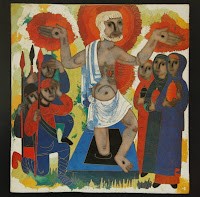
We commemorate All Hallow’s Eve, All Hallows’ Day and All Souls’ Day, aware of the thousands of people who have perished in the horrific wars in Ukraine and Israel. At the same time, the fact that many Americans continue to die from COVID-19, the alarming increase in mass shooting deaths including the recent horrific mass murders in Lewiston, Maine, and the deaths that occur regularly in our parishes and in our families may cause more people than usual to think about death and the relationship between the mystery of the Resurrection of Jesus Christ and the Catholic Church’s affirmation of eternal life. It is unfortunate that some Catholic families may spend more energy preparing ghoulish Halloween costumes for their children than teaching them how to become saints on All Saints’ Day and guiding them in prayer for their dear ones who have died on All Souls’ Day.
On Sundays, Catholics “say” these words from the Creed, “For our sake He was crucified, suffered, died, and was buried. He rose again on the third day in accordance with the scripture.” And a few lines later, “I look forward to the resurrection of the dead and the life of the world to come.” These words are rarely proclaimed with an awareness of their amazing wonder and mystery. They are simply “said” in a matter-of-fact manner that is no different from saying, “I look forward to having breakfast with my family after Mass.” Yet, these are such astounding words that much of the world’s population considers them to be not only unbelievable but also incomprehensible.
I. Religious Language Concerning Death and Eternal Life
When the Letters of St. Paul and the Gospels give testimony about the Resurrection, they are clearly not saying that Jesus of Nazareth simply came back to normal human life, like Lazarus. The wonder of the Resurrection is a glorification of Jesus as the Christ wrought by the God who is God, dwelling in unapproachable light. The Scripture witnesses make it clear that the “event” of the Resurrection was not an ordinary news event that could have been reported by CNN or FOX News reporters. The same is true about the “eternal life” to which Christians look forward. Language about “going to heaven” is not the same as language about “going on vacation to Nigeria.”
When we speak of Christ’s Resurrection and our hope of eternal life, we are “bending” language in a special way, attempting to express what is ultimately inexpressible. The language we use to convey religious faith is not “ordinary, everyday” language at all. It is language struggling to convey religious meaning. Religious language both reveals and conceals the mystery to which it points. The language of religious faith has been compared to the language of individuals bound together by deep and abiding love. We all know that those who love deeply often turn to poetry and poetic discourse to express their interior ecstatic state that they cannot express in ordinary vocabulary.
The philosopher-anthropologist Paul Ricœur wrote about the use of the language of avowal to affirm beliefs, and the employment of mytho-poetic symbolic language to convey awareness of realities beyond everyday experience. Jesuit theologian Bernard J.F. Lonergan wrote about religious language orienting us into mystery, the “unknown-unknown.” Philosopher-scientist Michael Polyni wrote about “tacit knowing,” that which we sense we “know” but cannot satisfactorily verbalize. When we bend language to speak about religious mystery, our intentionality is to convey more and not less than what our inadequate words convey. All of this reminds us that the world is more than we know, and when it comes to expressing deep religious faith, we are constrained by the limits of language, the unlimited horizon of possibilities, and the permanence of mystery.
The Belgian Jesuit Roger Troisfontaines wrote a classic study on death and faith in eternal life, which he provocatively called, “I Do Not Die.” Nevertheless, it is obvious that we Christians really do die like everyone else. Yet our faith affirms that death is not an ending but a transformation or a new beginning. We use language in unique ways to express that faith. Some of our efforts are more adequate than others. Consider these examples:
1.) On the Sundays between Easter and the Solemnity of the Ascension, the Church’s liturgy makes use of this type of language when the scripture readings prompt us to pray and think about what it means to affirm that Jesus Christ was “raised from dead” before “ascending into heaven.” Clearly, we are not saying He ascended to a physical “place” above the earth. What did He mean when He spoke about the many “dwelling places” in His Father’s “house?” In what sense was He “going” to prepare a place for us? Where was He going? Catholics speak about “going to heaven” when they die, without giving critical attention to the fact that this is a completely different kind of language from saying, “We are going to Hawaii for our honeymoon.” “Going to heaven” is using non-literal faith language to orient our minds and hearts into the Christian mystery of eternal life with God. Whereas “going to Hawaii” is simple, literal language about a geographical place. When Jesus spoke of the “many mansions” in His Father’s house, He was clearly using non-literal “faith language.”
2.) In the Creed we proclaim that we “look forward to the resurrection of the dead and the life of the world to come.” The Creed does not explain what “the world to come” might be. Significantly, we do not say, “We believe in the immortality of the human soul.” These two religious affirmations can be easily confused. We can erroneously surmise that “resurrection” and “immortal soul” are two different ways of saying the same thing, which they are not. The first statement, about resurrection, is biblical and primarily a theological assertion. The second statement about immortality is essentially non-biblical and is primarily a philosophical assertion (Greek philosophers, like Plato, believed in the immortality of the soul. But Plato would never have spoken of the resurrection of the dead). Some researchers contend that many Christians, including some Catholics, are more inclined to believe in the immortality of the soul than the resurrection of the dead. This may be because it is easier to “visualize” the soul going “up” to heaven than to “visualize” the dead being raised. From the time we were children, we used “picture language” to “visualize” the mysteries concerning Christian death.
3.) When a Catholic funeral announcement says someone has “fallen asleep in the Lord,” this is a biblical but non-literal statement. The person is not asleep. This is religious devotional language to express the Christian faith that though the person really and truly has died, he or she died filled with Christian hope of sharing in the transformed life of the risen Christ. This language born of the religious imagination is expressing confident faith that the person who died had a personal relationship with Jesus Christ as Lord and Redeemer. They died in a graceful state. It is that religious faith that anchors the confidence that the dead person has died in communion with Christ.
4.) Still, sleeping imagery is one of the ways we bend language to express Christian hope in the face of death. At the visitation for a person who has died after a long, debilitating illness, someone, admiring the mortician’s art, may say, “She looks like her old self, she is sleeping so peacefully.” Of course, we pray, “Eternal rest grant unto her, O Lord!” “May her soul and all the souls of the faithful departed, through the mercy of God, rest in peace.” The sleep metaphor can be emotionally and spiritually quite comforting, though it cannot be literally true. The souls of our family members and friends who have died are not actually resting or reposing. As pure spirits, they have no need for rest. Are they not actively awaiting the coming of Christ to judge the living and the dead at the end of time?
5.) A young mother of three children dies from cancer. Well-wishers tell her children, “Well, we know your mother is in a better place.” Children may not know what to make of this language. How do they know she is in a “better place?” Or, they may think, if their mother is in “a better place,” why shouldn’t they want to die and join her there? Where is this “better place?”
6.) A nine-year-old boy is hit by a car while riding his bike. After the funeral, his father comforts his wife and other children saying, “Billy was an angel in our family. God has now made him an angel up in heaven where he is watching over us.” Soothing as these words may be, the Church neither teaches nor believes that the dead become angels in heaven.
7.) A perfectly healthy baby dies during the night from Sudden Infant Death Syndrome. Hoping to comfort the grieving parents, a neighbor says, “We cannot question “the will of God.” You must accept this as part of God’s mysterious plan for you and your baby. After all, the baby was spared life’s struggles and sorrows and is now eternally happy in heaven.” But the parents may continue to struggle with the anguished question: “Why did this happen to our child?”
8.) Today, many families place special objects in the coffin before it is closed. These may be personal letters, video messages, recordings of favorite music, the person’s mobile phone, their favorite food or beverage, or photographs. The grieving family knows the person who has died will not “need” or “enjoy” these items in the grave. But these non-verbal gestures may be a very imperfect way of affirming, “in death, life is not ended, but merely changed.” They are a type of non-verbal “bent” language.
9.) Many funeral homes provide comforting verses for memorial cards like this one:
“I am home in heaven, dear ones; All’s so happy, all’s so bright!
There’s perfect joy and beauty in this everlasting light.
All the pain and grief are over, Every restless tossing passed;
I am now at peace forever, Safely home in heaven at last…
Try to look beyond earth’s shadows, Pray to trust our Father’s will.
There is work still waiting for you, So you must not idly stand,
Do your work while life remaineth- You shall rest in Jesus’ land.
When that work is all completed, he will gently call you home;
Oh, the rapture of the meeting! Oh, the joy to see you come!”
These words may well be temporarily comforting for some grieving family members. But they can also be problematic. From its first words, the poem presumes that the person is “in heaven.” The idea of divine judgment and possible punishment goes unmentioned. Is a violent death at the hands of a murderer “our Father’s will?” Many people die in their prime, leaving behind young children. Is their work “all completed?” Death is often a painful struggle. It is not experienced as God “gently calling” the dying person home. Would it not be far better to put aside these comforting but potentially theologically misleading sentiments and use poetry informed by scripture and the teachings of the Church? Or does it really matter if words about death are biblically unsound so long as they are consoling? I have raised this question with priests over the years. A number of them have responded, “It does not matter whether such words are good scripture-based theology or not. What matters is that they truly make people feel better at a time of intense grief and suffering.”
10.) The cover of an increasing number of funeral programs that I see for the Liturgy of Christian Burial, even those for deacons, priests and bishops, state that this is “The Mass of the Resurrection” even though it is not a Mass of the Resurrection. The person has not yet been raised from the dead. Further, being raised from the dead does not mean automatically that they are with God. There remains the question of Divine judgment. The book from which the priest proclaims the funeral prayers is “The Liturgy of Christian Burial.” If we know that the dead are “in heaven,” we do not need to pray for them. We should pray to God for ourselves through their intercession. However, some of the Christin faithful have suggested that a “Mass of the Resurrection” or even, “A Celebration of Life,” convey a much more positive tone than “Christian burial.” These expressions help the family members to turn their focus away from the dreaded reality of death and “get on with life.”
II. The Teachings of the Catholic Church
Many homilists at Catholic funerals speak with the presumption that the person for whom the Christian faithful are praying is already sharing in the life of the world to come and even enjoying activities they enjoyed on earth. Some preachers seem to imply, by a conspiracy of silence, that heaven awaits everyone who dies no matter how they lived. This contemporary denial of sin and punishment is contradicted by the prayers of the funeral liturgy and the clear teachings of the Church.
The Catechism of the Catholic Church is a useful catechetical resource for pastors and the People of God they serve to gain a clearer understanding of what the Church believes and teaches concerning eternal life. A study of The Catechism shows that the Church uses different types of language for the eschatological mysteries at different moments in history and at different councils. The language may be at times quite literal and pictorial, at other times quite symbolic and metaphorical, and at other times quite philosophical, metaphysical, or scriptural. The Catechism examines “Eternal Life” in Article 12, "I Believe in Life Everlasting."
“The Christian who unites his own death to that of Jesus views it as a step towards Him and an entrance into everlasting life. When the Church for the last time speaks Christ's words of pardon and absolution over the dying Christian, seals him for the last time with a strengthening anointing and gives him Christ in viaticum as nourishment for the journey…(praying) May you return to your Creator, who formed you from the dust of the earth. May you see your Redeemer face to face.” (1020) This expresses the fundamental hope in eternal life.
The Catechism then explains that Christians are judged at the moment of death (Particular Judgment). “Death puts an end to human life as the time open to either accepting or rejecting the divine grace manifested in Christ. The New Testament speaks of judgment primarily in its aspect of the final encounter with Christ in His second coming, but also repeatedly affirms that each will be rewarded immediately after death in accordance with his works and faith.” (1021)
“Each man receives his eternal retribution in his immortal soul at the very moment of his death, in a particular judgment that refers his life to Christ: either entrance into the blessedness of heaven-through a purification or immediately,-- or immediate and everlasting damnation. At the evening of life, we shall be judged on our love.” (1022)
“Those who die in God's grace and friendship are perfectly purified to live forever with Christ. They are like God forever, for they "see Him as He is," face to face.” (1023)
“This perfect life with the Most Holy Trinity—this communion of life and love with the Trinity, with the Virgin Mary, the angels and all the blessed—is called "heaven." Heaven is the ultimate end and fulfillment of the deepest human longings, the state of supreme, definitive happiness.” (1024)
“By His death and Resurrection, Jesus Christ has ‘opened’ heaven to us. The life of the blessed consists in the full and perfect possession of the fruits of the redemption accomplished by Christ. He makes partners in His heavenly glorification those who have believed in Him and remained faithful to His will. Heaven is the blessed community of all who are perfectly incorporated into Christ.” (1026)
“This mystery of blessed communion with God and all who are in Christ is beyond all understanding and description. Scripture speaks of it in images: life, light, peace, wedding feast, wine of the kingdom, the Father's house, the heavenly Jerusalem, paradise: ‘no eye has seen, nor ear heard, nor the heart of man conceived, what God has prepared for those who love Him.’” (1027)
“Because of His transcendence, God cannot be seen as He is, unless He Himself opens up His mystery to man's immediate contemplation and gives him the capacity for it. The Church calls this contemplation of God in His heavenly glory ‘the beatific vision.’” (1028)
From these passages, it is clear that the Church does not teach that a Christian automatically “goes to heaven” simply by dying. Heaven is more a metaphysical “state of being” than a physical place. It is “beyond all understanding and description.” Divine judgment necessarily proceeds sharing in the joy of heaven. The Catechism teaches that with heaven “the mystery of the blessed communion with God” is “beyond all understanding and description.” Indeed, we human beings cannot even conceive “what God has prepared for those who love Him.” Heaven should not be conceived of as a physical place, a beautiful golden room, somewhere in the universe. Rather, it is a state of being, “a state of supreme, definitive happiness” in which, by grace, we are allowed the blessed vision of God. The Catechism wisely reminds us that, while the Church affirms heaven to be real, no human language can adequately reveal its mystery.
The Catechism offers a brief summary of the Church’s teaching on the final purification of the dead (Purgatory), the eternal punishment of grave sinners (Hell), and, to the surprise of many, makes no mention of Limbo.
The Church has long acknowledged that Jesus Christ and the New Testament make no explicit mention of Purgatory. Its existence is inferred from theological reflection on God’s judgment and mercy. “All who die in God's grace and friendship, but still imperfectly purified, are indeed assured of their eternal salvation; but after death they undergo purification, so as to achieve the holiness necessary to enter the joy of heaven.” (1030)
“The Church gives the name Purgatory to this final purification of the elect, which is entirely different from the punishment of the damned. The Church formulated her doctrine of faith in Purgatory especially at the Councils of Florence and Trent. The tradition of the Church, by reference to certain texts of Scripture, speaks of a cleansing fire: “As for certain lesser faults, we must believe that, before the Final Judgment, there is a purifying fire.” (1031) Many Catholics have long believed that the primary meaning of the teaching on Purgatory is that those who die in a state of less serious sin are condemned to a place of suffering which is not eternal and not as intense as Hell. But the human soul is spiritual and cannot be tormented by physical fire. The primary suffering of Purgatory is the knowledge that one is separated from God because of one’s own sins. Nevertheless, years ago I heard a retreat speaker say, “God can miraculously make it possible for the soul to experience the pain of physical fire of Purgatory and Hell and He can create a place in some distant part of the universe for the souls of sinners to suffer until they are purified.” But The Catechism does not say anything like this. It does not say “where” Purgatory is or “how long” this purification takes in earthly time. Nevertheless, the Church does command us to pray for the dead, “From the beginning the Church has honored the memory of the dead and offered prayers in suffrage for them, above all the Eucharistic sacrifice, so that, thus purified, they may attain the beatific vision of God.” (1032)
Almost every Catholic has seen one of the many powerful paintings from the 15th and 16th centuries depicting Christ coming in glory at the end of time, at the Last Judgment, as His angels guide the just, who have been raised, “up” to heaven as demons guide sinners, who have also been raised “down,” into the horrible torment of Hell. The most powerful of these paintings is surely Michelangelo’s masterpiece, “The Last Judgment” on the wall of the Sistine Chapel. And in literature, nothing can compare with Dante Alighieri’s terrifying account of “Purgatorio” and “Inferno” in his masterful “Divine Comedy.” While these powerful artistic renderings may awaken in us a lively fear of sin, they cannot be construed as literal visions of Purgatory or Hell. The Catechism teaches, “We cannot be united with God unless we freely choose to love Him. But we cannot love God if we sin gravely against Him, against our neighbor or against ourselves… Our Lord warns us that we shall be separated from Him if we fail to meet the serious needs of the poor and the little ones who are His (sisters and brothers). To die in mortal sin without repenting and accepting God's merciful love means remaining separated from God forever by our own free choice. This state of definitive self-exclusion from communion with God and the blessed is called ‘hell.’” (1033)
“Jesus often speaks of ‘Gehenna,’ of ‘the unquenchable fire,’ reserved for those who, to the end of their lives, refuse to believe and be converted, where both soul and body can be lost. Jesus solemnly proclaims that He ‘will send His angels, and they will gather . . . all evil doers, and throw them into the furnace of fire,’ and that He will pronounce the condemnation: ‘Depart from me, you cursed, into the eternal fire!’” (1034)
“The teaching of the Church affirms the existence of hell and its eternity. Immediately after death the souls of those who die in a state of mortal sin descend into hell, where they suffer the punishments of hell, ‘eternal fire.’ The chief punishment of hell is eternal separation from God, in whom alone man can possess the life and happiness for which he was created and for which he longs.” (1035)
“The affirmations of Sacred Scripture and the teachings of the Church on the subject of hell are a call to the responsibility incumbent upon man to make use of his freedom in view of his eternal destiny. They are at the same time an urgent call to conversion: ‘Enter by the narrow gate; for the gate is wide and the way is easy, that leads to destruction, and those who enter by it are many. For the gate is narrow and the way is hard, that leads to life, and those who find it are few.’” (1036)
“God predestines no one to go to hell; for this, a willful turning away from God (a mortal sin) is necessary, and persistence in it until the end. In the Eucharistic liturgy and in the daily prayers of her faithful, the Church implores the mercy of God, who does not want ‘any to perish, but all to come to repentance.’” (1037)
The most important statement in this section is this: “This state of definitive self-exclusion from communion with God and the blessed is called hell.” Hell consists of a state of “self-exclusion from God. Only after that does The Catechism recall the biblical images of fiery suffering, where fire, then as now, evokes fear of excruciating pain. As with Purgatory, we need not imagine literal flames consuming flesh and spirit. Remember our earlier discussion of the way language concerning matters of faith is often “bent’ language, metaphorical, symbolic, and biblical imagery. But even when The Catechism cites fiery images, the text stresses that, the chief punishment of hell is eternal separation from God. The Catechism speaks of hell as a state of being rather than place. Nor does it speculate about who or how many people will experience this dreadful, self-inflicted punishment.
Why is there no mention of Limbo, the unfortunate fate of unbaptized infants, in The Catechism? There is no mention of Limbo in scripture. Nor does it have a firm foundation in tradition. Still, it was commonly taught that since unbaptized infants could not experience the happiness of heaven due to Original Sin and since, in their innocence, they should not be condemned to eternal punishment, the word Limbo was used to speak of their “in between status.” Limbo comes from a Latin word meaning “border” or “edge” which medieval theologians speculated to be a state or “place” reserved for the unbaptized dead as well as good people who lived before the coming of Christ. This was never a satisfactory theological conclusion.
In 2007 Pope Benedict XVI approved the statement “The Hope of Salvation for Infants Who Die Without Being Baptized,” by the Church’s International Theological Commission saying the idea of Limbo represented an “unduly restrictive view of salvation.”
The statement concluded that “there are theological and liturgical reasons to hope that infants who die without baptism may be saved and brought into eternal happiness even if there is not an explicit teaching on this question found in revelation. There are reasons to hope that God will save these infants precisely because it was not possible to baptize them.” It also said, “People find it increasingly difficult to accept that God is just and merciful if He excludes infants, who have no personal sins, from eternal happiness, whether they are Christian or non-Christian.”
This statement stressed that its conclusions should not be interpreted as questioning Original Sin or “used to negate the necessity of baptism. This statement is probably the final word on the matter, since Limbo was never formally part of Church doctrine, even though it was taught to Catholics well into the 20th century.
The Catechism, released in 1992, saw no need to mention Limbo. Unfortunately, there was very little or inadequate preaching or catechesis about this theological development, leaving many Catholics today in the state of bewilderment. It would be helpful to many who continue to be concerned about this question (especially the parents of infants who die without baptism), if the clarification provided by the Vatican statement was shared more widely among the Christian faithful.
III. Conclusion: Easter Faith and the Life of the World to Come
Some years ago, a national study was done asking American Christians of different denominations what they believed about the Resurrection of Jesus of Nazareth and life after death. The results of the study were informative and thought-provoking. It found that many Christians, especially evangelical fundamentalists, believe in the literal, physical Resurrection of Jesus and physical resurrection of all people who have ever lived, so they can be judged by God. A good number of Christians, including some Catholics, said they truly believed in the Resurrection of Jesus, but they did not think it was a physical, biological event. They affirm that the body of Jesus has been glorified. They found it difficult to believe that all the dead will be literally, physically raised. They said they found it easier to believe in the immortality of the human soul than in the biblical resurrection of the body.
Some of those questioned said, “I believe that when we die the body returns to the earth forever and the souls of the just go to heaven. And the souls of sinners go to hell.” Still other Christians said they “believe that God’s superabundant love is so great that even the greatest sinners are given the chance to repent before they die, so they can enter heaven. Therefore, there is no need for hell or purgatory to exist at all.” But other Christians responded: “It would be unjust for God, even in His mercy, to bring all people to heaven, allowing sinners to go unpunished.”
Amazingly, a growing number of Christians seem to believe that their pets (especially dogs and cats) will be in heaven with them, even though animals do not have rational souls and neither scripture nor the Church teaches this. Still, others say their ideas about “eternal life” are drawn more from devotional books they have read and popular Hollywood movies, rather than from scripture or Church teachings. A growing number of young people, who claim to be Christians, believe that there is NO eternal life at all. In their view, when we die, the lights go off and that’s the end of it. We fall into oblivion as if we never existed. They often argue that we all experience heaven or hell right here on earth in this life, with no need for an afterlife.
It is not surprising that in today’s secular, pluralistic society, Christians hold a variety of different views about the Resurrection of Jesus and what happens to all of us when we die. This is well examined in Charles Taylor’s “A Secular Age.” Nor should it be surprising to learn that the survey found that many Christians prefer not to think about these difficult biblical, theological, and metaphysical questions at all. They leave it to the Vatican, the Bishops, the Priests, and theologians to think about such questions. They prefer to simply go about their daily affairs in this life, thinking of death only when they are forced to contend with a death in their family, and those who come to console them can find no more comforting words than, “I’m sorry for your loss.”
Homilists sometimes speak confidently about the person who has died engaging in their favorite activity in Heaven. On All Saints Day 1993, I made a journal entry, “I was surprised to hear the priest at Susan’s funeral say, ‘Knowing how much she liked to cook, she is probably baking cookies for the angels at this moment, while her husband is beating St. Peter in a game of golf.’ Obviously, these remarks, which may be heartwarming to some, are untrue. They have no Scriptural or theological basis, and they trivialize the impenetrable mystery of death.” We must die to enter the fullness of the Kingdom of Heaven. But the simple fact that someone whom we admired has died does not mean that we can speak with certainty of her or him as being in heaven. Clearly, it is theologically incorrect and pastorally unwise to suggest that the transition from death to eternal life is no different from flying from New York to Cape Town. Would it not be better to say nothing than to “comfort” people with fanciful “religious images” that are not rooted in the Paschal mystery of Jesus Christ Himself?
Gaudium et Spes, the Second Vatican Council’s “Pastoral Constitution on the Church in the Modern World,” states that, “It is in the face of death that the riddle of human existence becomes most acute.” This existential fact that every human person is moving towards the mystery laden horizon of death is the reality that puts the meaning of human existence into question. If we all lived forever in life, as we now know it, our entire worldview would be different, and our understanding of religion would be radically transformed. As Jesuit theologian Karl Rahner often remarked, the Christian dies just like everyone else. And one of the deepest elements of grief is the fact that no one who is alive can fully grasp what “death,” “dying,” and “being dead” really are. What we do know and what Sherwin B. Nuland’s How We Die makes disarmingly clear, is the fact that there is no conclusive, empirical evidence of human survival of death in the everyday experience.
A significant number of contemporary Catholics seem to have only a vague idea of what is meant by the particular judgment, at the time of death, and last judgment, at the end of time. Some more thoughtful Catholics may be unwilling to submit to what Christian philosopher Paul Ricoeur calls the sacrificium intellectus that is required to affirm a literal three-story universe with Heaven above the earth and Hell below. Yet they are unable to enter Ricoeur’s “post critical naiveté” which affirms that while mytho-poetic images of eternal life may not be literally true, they are valid mediators of the authentic religious meaning mediated by faith language.
One of the reasons for this confusion may be the fact that these fundamental questions of faith are not being clearly and effectively addressed by means of consistent preaching and instruction in our parishes. Most priests probably present the tradition of the Church on these matters, but perhaps infrequently and without sufficient nuance. Some priests may preach forcefully about a wrathful God, who condemns sinners to the pain of a fiery Hell, while others, feeling out of step with the times, may remain silent. Other priests may think that their people are rather skeptical about traditional Christian eschatology, so they place less emphasis on the life of the world to come; focusing instead on the Heaven and Hell that we create for ourselves in this world. Still others will wisely stress that the true suffering of Hell is the experience of being eternally separated from God, because of the personal refusal to accept the offer of Divine love. And the true joy of Heaven is the experience of being eternally united with God, because, with God’s grace, we have accepted the offer of Divine love.
While it should not be difficult to speak clearly about the Church’s beliefs, it can be problematic if we speak too literally about them. The Catechism wisely teaches that we cannot know “how” God brings about the life of the world to come.
If God was Michelangelo’s powerfully built bearded, grey haired, elderly, European man swirling amidst the clouds on the ceiling of the Sistine Chapel watching over us, we could imagine God leading us by the hand to one of the “many mansions” in His heavenly home and then, with “picture thinking,” our religious imagination would allow us to “see” what heaven might be like. But, as genuinely spiritually moving as Michelangelo’s magnificent creation fresco may be, the anthropomorphic “god” in the splendid painting is not actually God.
God is not God the way we would be God if we were God.
The God who is dwells in unapproachable light. Absolute Truth! Absolute Goodness! Absolute Beauty! The Eternal, All Powerful, All Knowing, All Just God is BEING ITSELF (ipsum esse subsistens -BEING ITSELF SUBSISTING, “I AM WHO AM.” (Exodus 3:14) “YHWH.” “Adonai”) It is this pure Infinite Act of Existence that sustains the vast, ever-expanding universe. If you have seen the awesome photographs that The National Aeronautics and Space Administration (NASA) published, taken by the new James Webb Space Telescope, you know that these magnificent images peer back at the moment when the first stars cleared away limitless clouds of primordial gas, seen as light, that have been traveling towards earth for 13.6 billion years.
The first stars began to burn as unfathomable vessels of brightness that would create the carbon, the nitrogen and the oxygen that make up 86.9% of our human bodies. By some alchemy of thermodynamics, by some act of primordial grace, we human beings are mostly composed of starlight, our mass coming from some mysterious vibration of immortal and timeless energy, echoing through the universe from the beginning of time. The Webb Telescope has made us almost like the eyes of God, peering out into the endless darkness and light of creation.
Eternal life with God, dwelling in unapproachable light, exceeds not only our understanding, but also our imagination. However, these NASA images may be a helpful reminder of the majesty and transcendence of God, who offers us a share in Eternal Life “in Heaven.” This is sharing in the Living Gift of Divine Love, merited by the life, death, resurrection and ascension of Jesus Christ through the power of the Holy Spirit.
The Eschaton and the Parousia are beyond our immediate human experience because they are in the realm of “Kairos,” that transcends the realm of “Cronos;” time and space as we know them. Their reality is accessible only by faith in Jesus Christ, present in the Church by the power of the Holy Spirit. As St. Paul teaches us in his letter to the Christians living in Corinth, “But, as it is written, 'What no eye has seen, nor ear heard, nor has it entered the heart of man, what God has prepared for those who love Him' – these things God has revealed to us through the Spirit; for the Spirit searches everything, even the depths of God.” (1 Cor. 2:9) “We see now through a glass, darkly, but then face to face.” (1 Cor. 13,12)
The permanence of mystery and the limits of language necessitate that the discourse of faith both discloses and conceals the ineluctable reality to which it points. This helps us to appreciate why so much of the Scriptural and religious language about eternal life is poetic, symbolic, metaphorical, and allegorical (I think of Jesuit Gerard Manley Hopkin’s, “God’s Grandeur,” T.S. Eliot’s “Four Quartets,” Emily Dickinson’s “The Brain is Wider than the Sky,” “Paradiso” from Dante’s “Divine Comedy,” and Gustav Mahler’s monumental Symphony #2, “Resurrection”); and most theological language about it, such as St. Thomas Aquinas’ speculations about the soul’s immediate, intuitive knowledge of God in the Beatific Vision, is highly abstract and metaphysical. Whatever language we employ, we must never forget the words of the Letter to the Hebrews. “Faith is the assurance of things hoped for and the evidence of things unseen.” (11, 1.) We cannot provide scientific evidence and empirical proof of the mystery of heaven but, with confident faith anchored in the testimony of the Word of God, we continue to believe what St. Paul believed when he wrote to the Christians living in Corinth. He told them that when our perishable nature has put on imperishability, death will be swallowed up in victory.
Confronting the existential fact of death and the hope of Eternal Life is at the heart of the celebration of the Easter Triduum. Our Lenten disciplines of prayer, fasting, abstinence, and almsgiving, our prayerful journeying with our catechumens, our willingness to imitate Christ by emptying ourselves so that we might experience true conversion; all of this is to bring about a genuine participation in the Paschal Mystery. We must be baptized into His life and into His death if we are to be baptized into His Eternal Life. The Easter mystery of the Resurrection of Jesus, therefore, must not be thought of as a legal balancing of the books between God and humanity that happened in the past. The Easter mystery is now! It is the ratification of God’s irrevocable commitment to the human race in the birth, life, death, and Resurrection of Christ. The Easter event prefigures and reveals the transformation and, yes, the divinization to which each of us is called.
We rejoice as we celebrate the great Easter Vigil, the blessing of the new fire, the new water and proclaim the Exultet before the Paschal Candle, the pillar of fire that we place before the eminently gentle remains of the dead during the Liturgy of Christian Burial. We announce that the risen Christ, Alpha and Omega, is our Light. Knowing that the brilliant candles that fill the church are but a hint of the radiant Light of Easter. Our hope filled prayer for all who have died in Christ is that it truly is Easter; Easter filled with wonder, awe, splendor, life, love, and glory, Easter that lasts forever! ALLELUIA!